

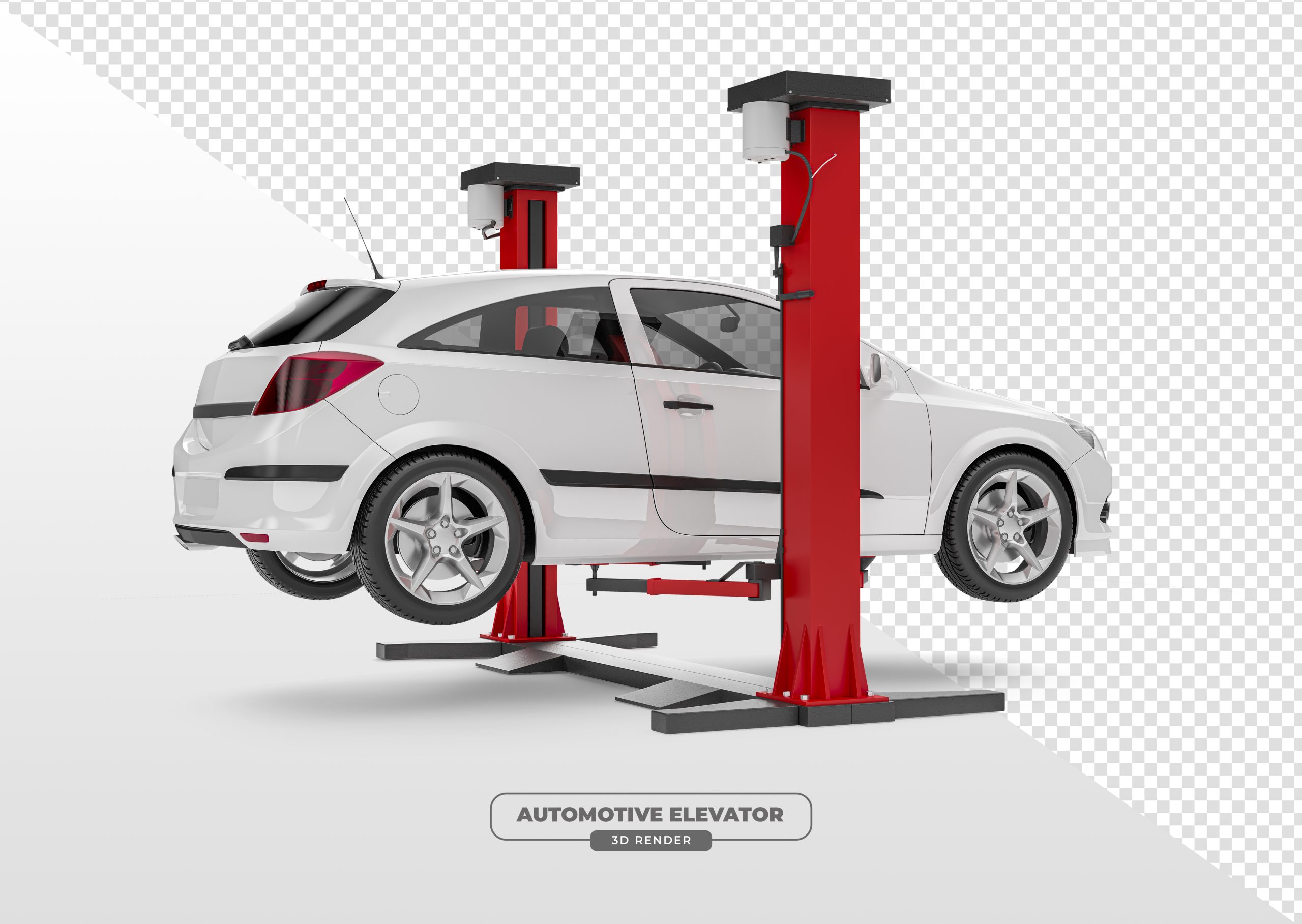
A car hoist lifts your vehicle so you can work standing up instead of crawling around on cold concrete. Two-post hoists give full access underneath and suit tall workshops. Four-post hoists are drive-on and double as extra parking. Scissor lifts fit lower sheds and handle lighter jobs. Before buying, check weight capacity, Australian safety certification, and whether your slab and ceiling can actually handle the hoist you want.
Anyone who’s spent a Sunday afternoon under a ute knows the drill. You’re flat on your back, the light’s rubbish, and that one bolt above your head won’t budge no matter how you twist your wrist. Add a sore back the next morning and a garage so cramped you can barely open the car door, and it’s easy to see why so many Aussie mechanics, both backyard tinkerers and full-time pros, eventually start looking at hoists.
A decent car hoist fixes most of that in one go. The vehicle comes up to you instead of you going down to it. You can stand properly, use both hands, and actually see what you’re doing without a torch clamped between your teeth.
HLS Equipment supplies workshop gear to mechanics and home garage owners right across Australia, and this is one of the questions we get asked the most. There’s no single “best” hoist. The right one depends on your ceiling height, your vehicles, and what sort of work you’re actually doing. Get it wrong and you’ve wasted space and money. Get it right and it changes how you work for years.
This guide walks through the main types of car hoists, what to check before you buy, and the safety standards that matter in Australia. By the end, you’ll know what questions to ask any supplier, HLS Equipment included.
Why bother with a car hoist in the first place?
Working without a hoist usually means floor jacks, axle stands, and a lot of patience. It works, but it’s slow, it’s hard on your body, and if something shifts while you’re underneath, the consequences can be serious.
A hoist changes the whole job. Brake work, suspension repairs, oil changes, exhaust jobs — all of it gets faster once the underside of the car is fully open and you’re not folded into an awkward position to reach it.
For anyone running a 4×4, a ute, or servicing their own vehicles regularly, a hoist is one of those upgrades that pays for itself in saved weekends and saved backs.
What types of car hoists are there?
There are three main types you’ll come across in Australian workshops and home garages: two-post, four-post, and scissor lifts. Each one suits different spaces and different jobs.
How does a two-post car hoist work?
A two-post hoist uses two upright columns with swing arms that grip the vehicle under its chassis. Once it’s up, there’s nothing in the way underneath — no ramps, no platform, just open access.
This makes it the go-to choice for proper mechanical work: brakes, suspension, engine jobs, anything where you need to get right in underneath.
Most two-post hoists need around 4,000mm of ceiling clearance, though this varies between models, so it’s worth checking the exact spec sheet against your own measurements before you commit to anything.
According to MAHA AU (2021), two-post hoists can handle nearly every type of service and maintenance task, and most can be run by one person. That’s a real plus if you’re a solo home mechanic or running a busy workshop floor without spare hands.
Best suited to: workshops doing heavy mechanical work, and home garages with a tall shed and a serious interest in DIY servicing.
How does a four-post car hoist work?
A four-post hoist is simpler in concept. You drive straight up onto a platform sitting on four posts, no need to line up swing arms or position anything underneath first.
Because the car stays on its wheels, these hoists double nicely as extra parking. Some models also come with rolling jacks built into the platform, which let you lift the wheels clear for brake or tyre work once the car’s already up.
Best suited to: home garages wanting extra parking space plus the ability to do basic maintenance, or workshops focused on routine servicing rather than deep mechanical repairs.
How does a scissor lift car hoist work?
A scissor lift raises the vehicle from underneath using a hydraulic scissor mechanism. It’s compact, quick to load, and some models can even be wheeled around the shed if you need to shift them out of the way.
Scissor lifts generally suit ceilings from around 3.1 to 3.4 metres, which makes them a solid option for the lower-set sheds common in a lot of Australian suburbs and regional properties. Always double-check clearance against the specific model though, since this varies.
The trade-off is access. Some undercarriage jobs are harder to reach on a scissor lift compared with a two-post hoist. And despite the smaller footprint, MAHA AU (2021) notes that scissor lifts can carry a significant upfront cost, so don’t assume “compact” means “cheap.”
Best suited to: smaller sheds, lower ceilings, and lighter jobs like tyre changes, oil services, and brake work.
How does a hoist actually change your workday?
Specs on a page only tell half the story. Here are a few fictional scenarios, not real HLS Equipment customers or projects, just examples to show how different hoists suit different situations.
Scenario one: a workshop near Toowoomba. Picture a small mechanical shop where brake jobs used to mean two mechanics on creepers, torches in their mouths, fighting rusted bolts from below. After putting in a two-post hoist, the same job gets done standing upright in half the time. Fewer sore backs by the end of the week, and jobs move through faster.
Scenario two: a home garage in regional Queensland. Imagine a home mechanic with a low-set shed, ceiling around 3.2 metres, where lying on hot concrete through summer is miserable. A two-post hoist won’t fit the space, so she goes with a scissor lift instead. Now she handles tyre changes and oil services on her HiLux at home without booking into a workshop or sweating it out on the slab.
Scenario three: a rural property in Western Australia. Think of a property owner who services his LandCruiser himself before heading out on long trips, and who also needs somewhere to park a second vehicle overnight. A four-post hoist solves both problems at once: drive the LandCruiser up for maintenance, park the other car underneath when it’s not needed.
None of these are guarantees of what you’ll experience, but they reflect the kinds of trade-offs real workshop owners and home mechanics weigh up every day.
What should you check before buying a car hoist?
Picking the right type is step one. Getting the finer details right is just as important, and it’s where a lot of buyers trip up.
What Australian safety standards apply to car hoists?
Don’t skip this part. In Australia, the AS 2550 series covers the safe use of cranes, hoists, and winches, with AS 2550.1-2011 setting out general safe-use requirements (Standards Australia). Some suppliers also reference AS 1418.9 alongside this. If a supplier mentions it, ask them to explain exactly what it covers and confirm the current applicable standards with Standards Australia or your state WHS regulator, since standards and editions do get updated over time.
Always ask any supplier for compliance documentation against the relevant Australian Standards. It’s also worth checking whether a hoist meets EN 1493, the European standard for vehicle lifts, which some Australian suppliers reference as an additional benchmark.
Running a professional workshop comes with ongoing obligations too. Your state WHS regulator, whether that’s SafeWork NSW, WorkSafe Victoria, or Workplace Health and Safety Queensland, can advise on what’s required. Typically, this includes annual inspections carried out by a competent person.
How much weight capacity do you actually need?
Your hoist needs to comfortably handle the heaviest vehicle you’ll ever put on it, including everything bolted to it. A 4×4 fitted with a bullbar, long-range fuel tank, roof rack, and canopy can weigh considerably more than its base kerb weight suggests.
Choose a hoist with some capacity to spare above your heaviest real-world load, not just your everyday driver. If you service a few different vehicles, always plan around the heaviest one, not the lightest.
What installation requirements should you check first?
Before anything gets bolted to the floor, work through this list:
- Ceiling height: measure using your tallest vehicle, fitted with its racks, canopy, or lift kit, not the bare vehicle on its own.
- Concrete slab: two-post hoists anchor straight into the slab, so it needs to be thick, sound, and structurally up to the job. Four-post and scissor lifts spread the load more evenly but still need a solid, level surface. If you’re unsure, get an engineer to check it.
- Power supply: some hoists run on single-phase power, others need three-phase. Have a licensed electrician check your setup before you order anything.
- Floor space and roller door width: make sure there’s enough room around the hoist to operate it safely, and that your roller door is wide enough for the vehicle to get in and out.
- Council and insurer approvals: if you’re installing in a residential garage, check with your local council and insurer first. Requirements differ across states and territories.
Once it’s in, look for hoist locks, safety latches, and arm restraints as standard safety features, and book in annual inspections with a qualified person to keep everything in safe working order.
Which car hoist suits your shed?
| Hoist type | Best for | Ceiling needed | Ideal user |
|---|---|---|---|
| Two-post | Full mechanical work, engine and suspension jobs | Around 4,000mm+ (varies by model) | Workshops, well-set-up home sheds |
| Four-post | Basic maintenance, dual-purpose parking | Moderate, check model specs | Home garages, light workshop use |
| Scissor lift | Light maintenance, compact spaces | Around 3,100–3,400mm | Smaller sheds, home mechanics |
So, which hoist should you choose?
There’s no universal “best” car hoist, just the one that matches your ceiling, your heaviest vehicle, and the work you actually do week to week. A two-post hoist earns its keep in a workshop doing serious mechanical jobs. A four-post hoist makes sense if you want extra parking alongside basic servicing. A scissor lift is often the smartest fit for a lower, smaller shed focused on lighter maintenance.
Whichever direction you go, get it installed by a licensed professional, confirm it’s certified against the relevant Australian Standards, and keep up with regular inspections. A well-matched hoist makes your workshop safer and more productive for years. A poorly matched one just creates new headaches.
If you’re weighing up the options and want a second opinion on specs or fit, the team at HLS Equipment is happy to talk it through with you.
Frequently asked questions about car hoists in Australia
How much does a car hoist cost in Australia?
Costs vary a fair bit depending on the hoist type, weight capacity, and what your installation needs, including any slab work or electrical upgrades. It’s worth getting quotes from a few suppliers and factoring in installation costs, not just the price of the unit itself.
What’s the difference between a two-post and four-post car hoist?
A two-post hoist lifts the vehicle by its chassis using swing arms, which leaves the whole underside open and accessible. A four-post hoist is drive-on, so the car stays on its wheels, which is simpler to load but gives you less access underneath.
Are car hoists safe to install in a home garage?
Yes, provided the hoist is properly certified, installed by a licensed professional, and maintained with regular inspections. Check your local council’s requirements and confirm your slab can handle it before going ahead.
What ceiling height do I need for a car hoist?
It depends on the hoist type and the specific model. Two-post hoists generally need around 4,000mm, while scissor lifts can work in lower sheds from around 3,100mm. Always check the exact product specs, and measure your tallest vehicle with all its accessories fitted, not just the bare vehicle.
What if a car hoist doesn’t suit my shed at all?
Trolley jacks and axle stands are the usual fallback, though they’re slower and carry more risk than a proper hoist. A scissor lift is often the best middle ground for sheds where a two-post or four-post hoist simply won’t fit.




Leave a Reply