

Two-post hoists lift a vehicle by the chassis and give you full access underneath — the pick for serious mechanical work. Four-post hoists are drive-on, double as parking, and suit lighter maintenance and heavier vehicles. Scissor lifts are compact, work in lower sheds, and handle lighter jobs without eating up floor space. The right choice comes down to your ceiling height, your heaviest vehicle, and what you actually spend your weekends doing under the bonnet.
Anyone who’s spent a Saturday arvo flat on their back under a ute knows the particular misery of it. The torch keeps slipping out from between your teeth, the bolt you need is somewhere you can’t see, and by the time you finally crack it loose your shoulder’s wedged against the sump and your neck’s at an angle it was never designed for. Add a shed that’s barely wide enough to open the car door, and a slab that’s been baking in the sun all day so it’s still radiating heat at 6pm, and you start to understand why so many workshop owners and home mechanics eventually give in and buy a hoist.
It’s one of those purchases that changes how you work almost overnight. Instead of crawling under the car, you bring the car up to you. Suddenly you’ve got both hands free, decent light, and a back that isn’t screaming by the second job of the day. HLS Equipment hears from a lot of workshop owners and weekend mechanics asking which hoist actually suits their space, and the honest answer is that there’s no single best option. It depends entirely on your shed, your vehicles, and the kind of work you’re doing.
This guide walks through the three main types you’ll find in Australian garages and workshops — two-post, four-post, and scissor — along with the practical stuff that actually matters: weight limits, safety certification, slab requirements, and ceiling height. By the end you should have a pretty clear idea of which one suits your situation.
Two-Post Hoists: The Mechanic’s Go-To
How two-post hoists work (and why serious mechanics love them)
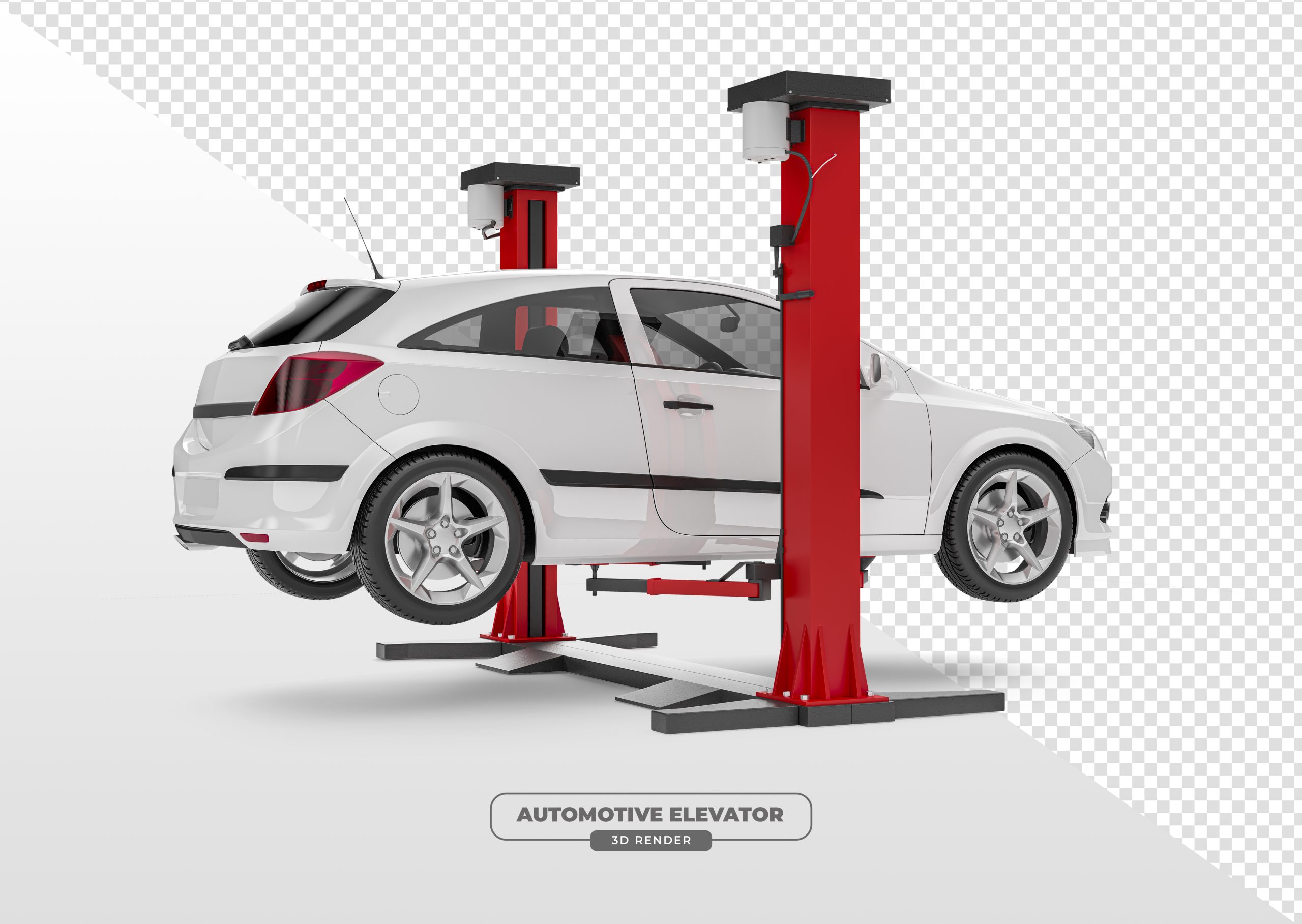
A two-post hoist does exactly what it sounds like — two upright columns, each with a swing arm that locks onto the vehicle’s chassis at four specific lift points. Once it’s up, there’s nothing between you and the underside of the car. No platform, no ramps, just open air and full access from any angle you want to approach it.
That’s precisely why two-post hoists are the default choice in most professional workshops. Brake jobs, suspension work, exhaust repairs, engine-out jobs — anything where you need to get right in underneath benefits from having the whole undercarriage exposed. A lot of models can also be run solo, which matters if you’re a one-person operation or you’re just not keen on roping in a mate every time you need a hand.
Full undercarriage access and why it actually matters
It’s easy to underestimate this until you’ve worked on a vehicle sitting on a platform versus one hanging open on a two-post hoist. On a two-post, you can walk right around and underneath, reach awkward bolts from whatever angle makes sense, and work on both sides of the vehicle without shuffling equipment around. For anything beyond routine servicing, that access is the whole point.
Weight capacity and compatibility with common Aussie vehicles
This is where it pays to be honest about what you’re actually lifting. A dual-cab ute kitted out with a bullbar, long-range tank, canopy, and a tray full of recovery gear weighs a lot more than the spec sheet’s base kerb weight suggests. Same goes for a 4×4 with a roof rack and drawers fitted. Always size the hoist to your heaviest realistic load — accessories and all — not just the lightest sedan that’ll ever roll through the door.
Safety considerations and AS 2550 certification
This part isn’t optional. In Australia, the AS 2550 series governs the safe use of cranes, hoists, and winches, with AS 2550.1-2011 setting out the general safe-use requirements (Standards Australia). Some suppliers also reference AS 1418.9 in the same breath. Whatever a supplier tells you, ask for the compliance paperwork, and double-check the current standard with Standards Australia or your state’s WHS regulator, since these things do get revised. If you’re running a commercial workshop, annual inspections by a competent person are generally expected too.
Space and installation — what a typical Aussie shed needs
Two-post hoists anchor directly into the concrete, so the slab needs to be thick and sound enough to take it — this isn’t something to guess at, get it checked by an engineer if there’s any doubt. Ceiling clearance is usually somewhere around 4,000mm, though it varies by model, so measure your tallest vehicle (with its roof rack or antenna fitted) before you commit to anything. You’ll also want enough clear space either side to swing the arms safely.
Cost and long-term value
Two-post hoists sit at the higher end of the price range once you factor in installation, especially if your slab needs reinforcing first. But for a workshop doing genuine mechanical work day in, day out, the time saved and the reduced strain on your body usually justifies it within a year or two.
Four-Post Hoists: Dual-Purpose Workhorses
The drive-on advantage
Four-post hoists are about as simple as it gets — you drive straight up onto a platform, no lining up swing arms or positioning anything first. The car stays on its own wheels the whole time, which makes it a lot friendlier for anyone who isn’t a trained technician. Some models even come with a built-in rolling jack so you can lift the wheels clear for tyre or brake work once the vehicle’s already up top.
Parking and storage benefits
Here’s the bit a lot of home garage owners love: because the vehicle sits on its wheels, a four-post hoist doubles as parking when you’re not using it for maintenance. If your shed’s doing double duty as a workshop and a place to keep a second car out of the weather, this is a genuinely useful feature rather than a gimmick.
Weight capacity and what jobs suit it best
Four-post hoists generally handle heavier loads comfortably, which makes them a solid match for utes and 4x4s. They’re better suited to basic servicing — oil changes, tyre rotations, inspections — than deep mechanical work, since the platform itself blocks some access to the underside compared with a two-post setup.
Safety standards and compliance
The same AS 2550 series applies here, and it’s worth checking whether a model also meets EN 1493, the European vehicle lift standard some Australian suppliers reference as an extra benchmark. Ask for documentation regardless of what the brochure claims, and keep up with scheduled inspections once it’s installed.
Ceiling height and floor space
Four-post hoists need a bigger footprint than two-post models, since you’re dealing with a full platform rather than two columns. Ceiling requirements are generally more forgiving, though it always pays to check the exact spec sheet for the model you’re looking at.
Why home garage owners often choose four-post
For someone who services their own vehicle occasionally and wants to park a second car when it’s not in use, a four-post hoist tends to make more sense than a two-post. It’s the practical, do-it-yourself-friendly option.
Scissor Lifts: When Space Is Tight
Compact design for lower sheds
A scissor lift raises the vehicle from underneath using a hydraulic scissor mechanism, and it’s the clear winner when ceiling height is the limiting factor. Most scissor lifts suit ceilings from around 3,100mm to 3,400mm, which covers a lot of the lower-set sheds you find across suburban blocks and regional properties. Always check the exact clearance for the specific model, since it varies.
Load capacity and typical vehicles
Scissor lifts generally carry a lower weight limit than two-post or four-post hoists, so they’re best matched to lighter maintenance work rather than heavy mechanical jobs. If you’re mostly doing oil changes, brake pads, and the odd inspection on a hatchback or mid-size SUV, a scissor lift will do the job without the ceiling demands of the bigger hoists.
Portability and flexibility
Some scissor lift models can be wheeled out of the way between jobs, which is handy if your shed does double duty as a workshop and a storage space. That flexibility isn’t something you get with a fixed two-post or four-post installation.
Safety certification and slab stability
Scissor lifts still need to meet relevant Australian Standards and sit on a solid, level concrete slab — the load is spread more evenly than a two-post hoist, but a sound surface still matters. Don’t assume “compact” means “cheap,” either. Upfront costs can still be significant depending on the model and features.
Best use cases
If you’ve got a lower-ceiling garage, only need a hoist now and then, and mostly work on lighter vehicles, a scissor lift is often the sweet spot between convenience and cost.
Choosing the Right Hoist for Your Situation
Start with your ceiling, your slab, and your heaviest vehicle
Measure your tallest vehicle with everything fitted — roof racks, canopies, aerials, the lot — not the bare vehicle off the showroom floor. Then get your slab properly assessed, particularly if you’re leaning towards a two-post hoist that anchors straight into the concrete.
Fictional anecdote: Picture a bloke out near Dubbo who was keen on a two-post hoist for his home shed, only to find his old slab wasn’t thick enough once an engineer looked at it. He ended up going with a four-post instead, which spread the load more evenly and avoided a costly slab job. It’s a reminder to check before you fall in love with a particular model.
Match the hoist to the work you actually do
Be honest with yourself here. If you’re doing genuine mechanical repairs — suspension, exhausts, engine work — a two-post hoist earns its keep. If you mostly want somewhere dry to park and the occasional tyre change, a four-post is probably overkill on capability but handy on convenience. If your shed’s low and your jobs are light, a scissor lift will likely tick every box without blowing the budget.
Fictional anecdote: Imagine a home mechanic in outer Melbourne with a double garage and a low tin roof. She wanted full mechanical capability but her ceiling simply wouldn’t allow a two-post hoist. She went with a scissor lift instead, and now handles brake jobs and oil changes on her Corolla at home without lying on the cold concrete through winter.
Budget and value over time
Get quotes that include installation, not just the unit price — slab work, electrical upgrades, and delivery can add up fast. A cheaper hoist that needs expensive slab remediation can end up costing more than a pricier model that suits your existing setup as-is.
Local installation and servicing
Always use a licensed installer, confirm the hoist meets the relevant Australian Standards, and book in annual inspections once it’s up and running. Requirements can differ slightly between states, so it’s worth a quick check with your local WHS regulator before you order anything.
A Good Hoist Changes How You Work
There’s no universal winner here — just the hoist that fits your shed, your vehicles, and the work you actually do. A two-post hoist rewards a workshop doing serious mechanical repairs. A four-post hoist suits anyone wanting extra parking alongside basic servicing. A scissor lift is often the smartest call for a lower-ceiling garage focused on lighter jobs.
Whichever direction you lean, get it installed properly, confirm the compliance paperwork, and keep up the inspections afterwards. HLS Equipment supplies workshop gear to mechanics and home garage owners right across Australia, and the team’s happy to talk through specs and fit for your particular shed if you want a second opinion before you buy.
Frequently Asked Questions
How much does a car hoist cost in Australia?
Prices vary depending on the hoist type, weight capacity, and what your installation needs — including slab work or electrical upgrades. Get quotes from a few suppliers and factor in installation costs alongside the unit price itself.
What’s the real difference between a two-post and four-post hoist?
A two-post hoist lifts the vehicle by the chassis with swing arms, leaving the entire underside exposed. A four-post hoist is drive-on, so the vehicle stays on its wheels, which is easier to use but gives you less access underneath.
Is it safe to install a car hoist in a home garage?
Yes, provided it’s properly certified, installed by a licensed professional, and inspected regularly. Check your local council requirements and have your slab assessed before going ahead.
What ceiling height do I need?
It depends on the hoist and the model. Two-post hoists typically need around 4,000mm, while scissor lifts can work with ceilings from around 3,100mm. Always check the exact specs and measure your tallest vehicle with accessories fitted.
What if none of these hoists suit my shed?
Trolley jacks and axle stands remain the fallback, though they’re slower and carry more risk than a proper hoist. A scissor lift is usually the best middle ground for sheds where a two-post or four-post simply won’t fit.



Leave a Reply